
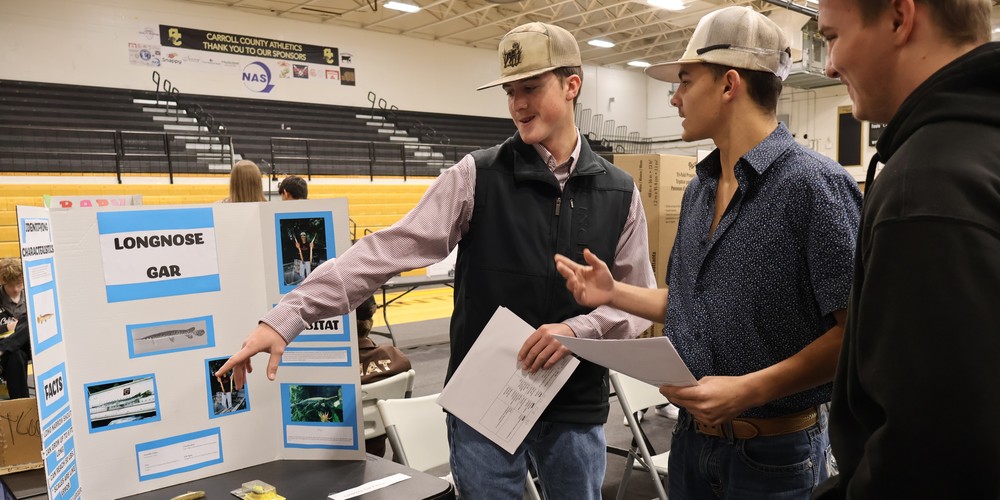
From river fish found in Kentucky waters to tropical birds, reptiles, and mammals from across the globe, the Carroll County High School Ecosystem Evolution Showcase highlighted a wide range of animals and environments. Students shared what they learned about how animals live and how humans impact their habitats.
One section of the gym focused on animals closer to home, where students connected their research to personal experience and local waterways. Those conversations often helped visitors understand why familiar species play an important role in regional ecosystems.
Patrick Parker spoke comfortably about the longnose gar, an animal he knows from fishing in local rivers. Fishing lures sat on his table as he explained how often gar show up in the Kentucky River. “I fish rivers all the time and have caught them,” Parker said. “You’re bound to catch one, even if it’s by accident.” He described their big teeth, tough scales, and fragile noses, helping visitors understand why the fish is often misunderstood. “They’re considered a trash fish but they are native,” he said, explaining that they only appear invasive because they are overpopulated.
Moving from local species to animals raised alongside humans, several students shared research on domesticated animals with roots in other parts of the world.
Dominick Davila shared what he learned about llamas while Cheyenne Bowen presented on alpacas. Both pack animals are native to South America, but can be found in petting zoos in the United States.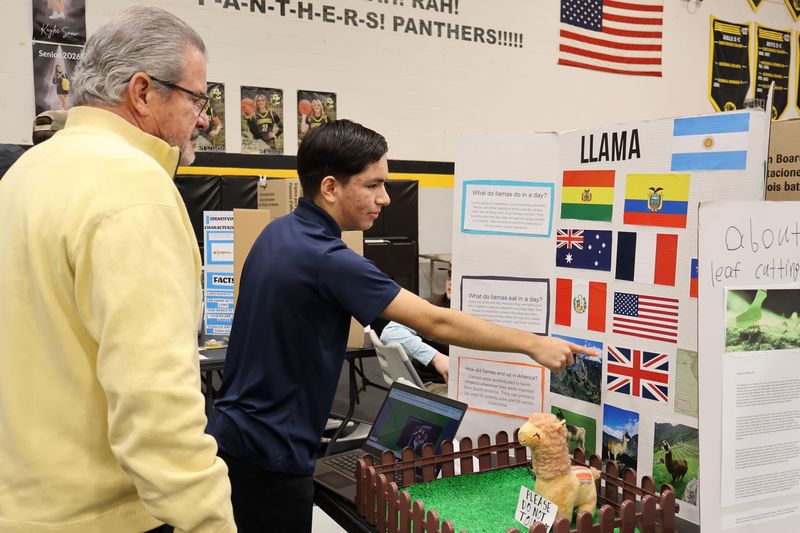
“I was so proud of how they presented and completed their projects,” said CCHS science teacher Jason Fishel. “Overall it was a great showcase and I am happy that I was able to allow the students to show their hard work to staff and community.”
Treavin Shovlin may have researched one of the most unique animals, the screaming hairy armadillo, which is native to South America. “They really do scream as a defense mechanism. They curl up in a ball and their hard shell can resist a lot,” Shovlin said, playing a video for visitors. “When I first heard it I thought it was really weird,” he added, explaining that the animal is small enough to hold in your hands.
As visitors moved through the gym, conversations shifted to animals living in dense forests and tropical regions, where human activity has a growing impact on wildlife.
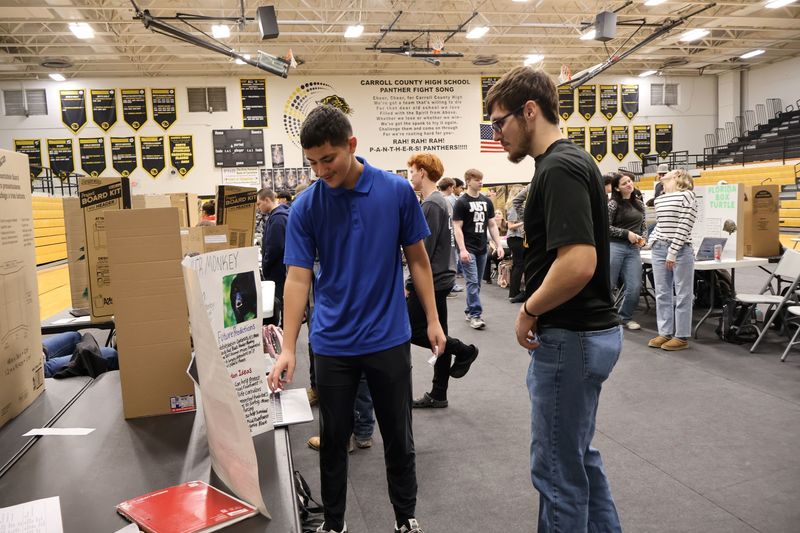
Konnor Snow described the black howler monkey, noting its bearded appearance, hunched posture, and ability to hang from branches using its tail. The most interesting fact he learned was the monkey’s ability to project his “call” for miles. “The three mile call is insane,” Snow said. He also explained that deforestation, road construction and vehicular traffic affect the species. “They don’t have any place to hide or go,” he said.
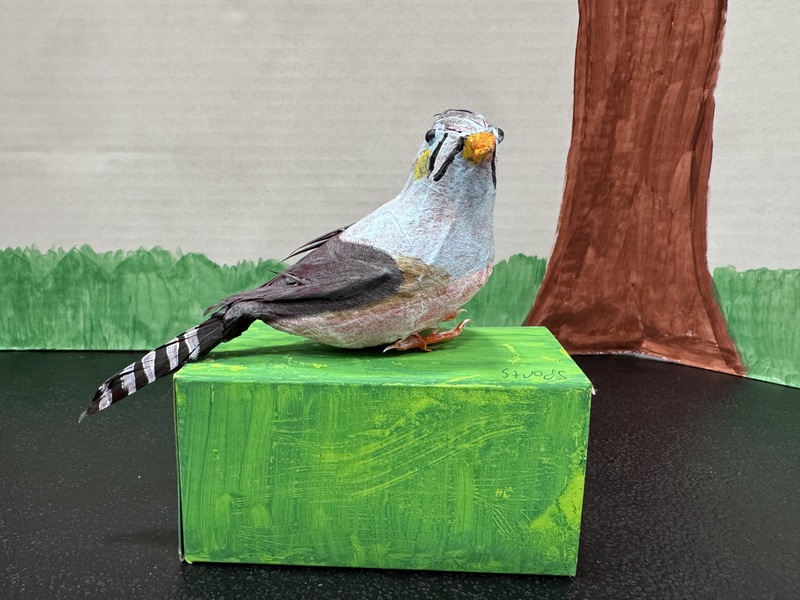
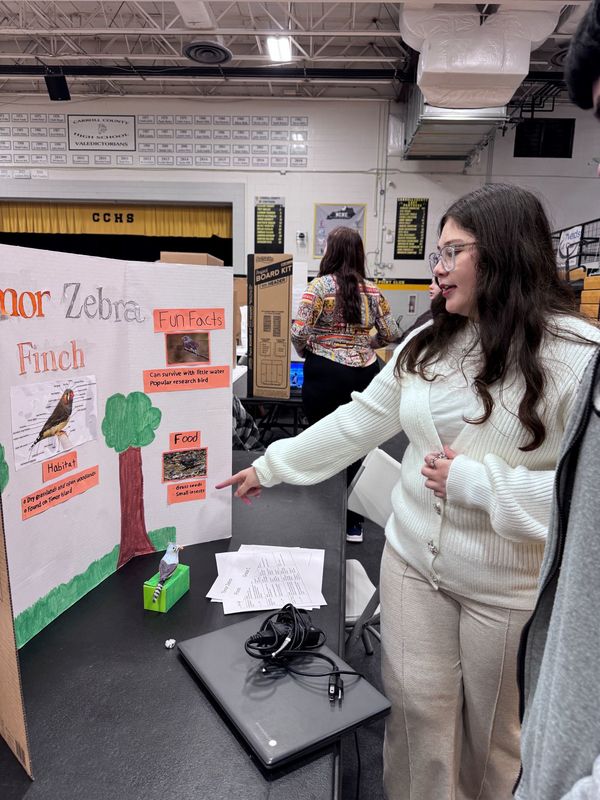
 At another table, Grace Oliva shared her research on the Timor zebra finch, a bird that lives on an island in Indonesia. “I love birds and butterflies. It’s a really unique bird,” she said. She explained that the bird prefers warm environments, can survive with very little water, and eats insects as well as vegetables like broccoli and carrots. Grace also noted that while the species is not currently heavily impacted by humans, future clearing of trees and grasslands could create challenges.
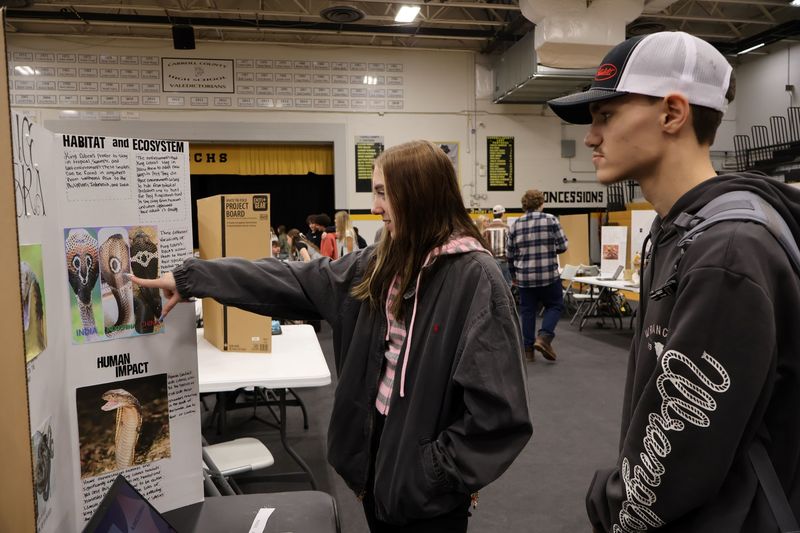
 Victoria Crutcher presented on the king cobra, which originated in Asia. “I like snakes, but definitely not these,” she said. The intimidating snake with the graceful hood has adapted throughout time to become venomous because “it helped their lifestyle and hunting prey,” she said. The snake, which can grow up to 18 feet, is at a high risk of extinction and is a common item sold on the black market, she added.
 The wide variety of animals served as a starting point for meaningful conversations, answering questions, sharing personal connections, and explaining scientific ideas in ways that were easy to understand, showing not only what they learned about ecosystems, but how well they could communicate that knowledge to others.
The showcase was a culmination of three units taught in Biology class. Students built a presentation that covered three of the Panther Pathways - Empowered Learner, Critical Thinker and Effective Communicator.
(More photos on the District Facebook page.)