
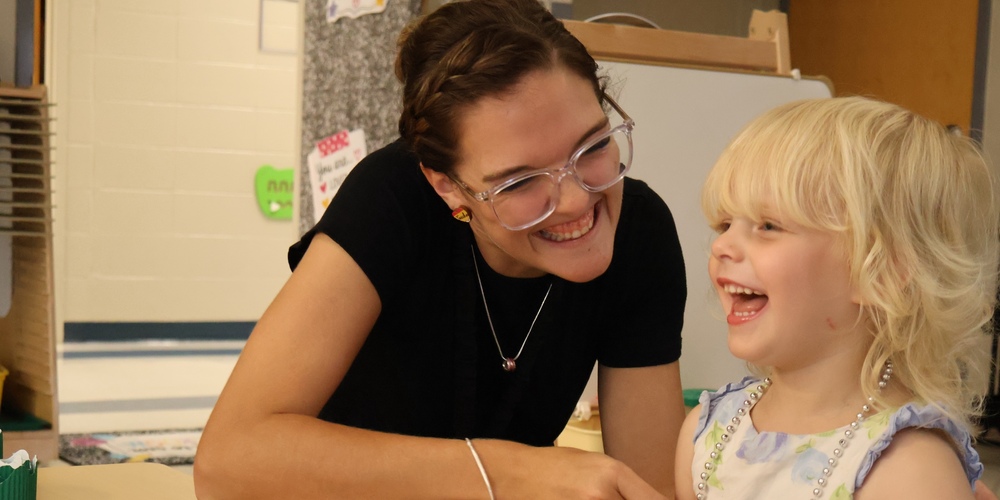
Carroll County Child Development Center Director Leah Spencer had no idea an email could create so much excitement.
It was August 3, the first day back for the preschool teachers at the Carroll County Child Development Center. Several teachers were gathered in the staff lounge when Spencer opened an email she had been waiting months to receive.
She saw the words announcing the center had earned a Five Star rating through the Commonwealth of Kentucky’s early childhood quality rating system.
“I just happened to have the email up and I saw it and I screamed,” Spencer recalled with a smile. “Everybody was like, ‘What’s wrong?’ I said, ‘We’re a five star!’ and everybody started screaming.”
It was a memorable way to begin the school year and a fitting celebration for a team whose work had been recognized under Kentucky’s new approach to evaluating early childhood programs.
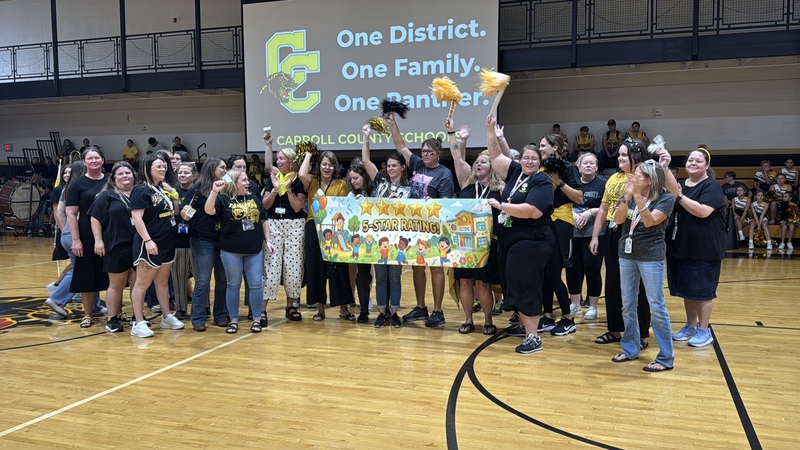 The Five Star rating is especially meaningful for Spencer and her staff because the evaluation process now focuses on the whole child, which has long been at the heart of the CCCDC’s work.
The state’s evaluation process has evolved from focusing primarily on classroom materials, physical environments and safety practices to looking more closely at how programs support children’s emotional development, relationships, connection and sense of belonging.
“We’re already a Head Start program, and the whole child is already the framework,” Spencer said. “The social-emotional piece is already part of what we do every day.”
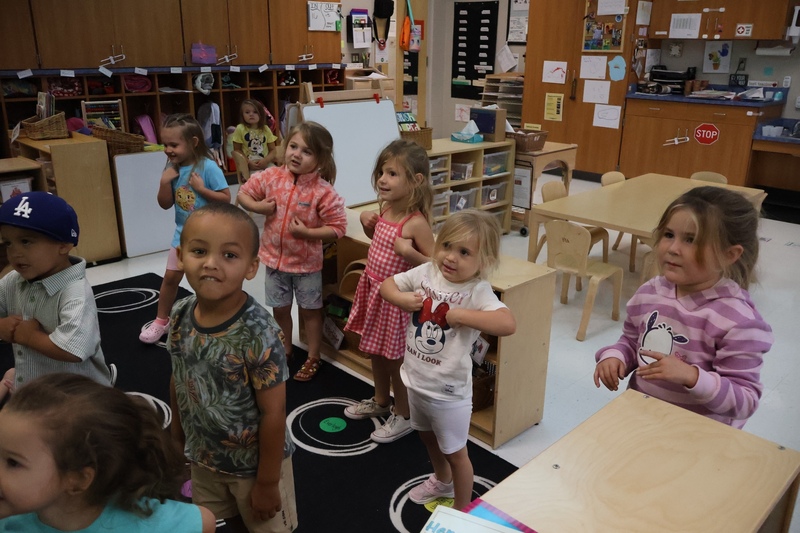 CCCDC classrooms intentionally create a sense of connection and belonging. Students are encouraged to see their classroom as a family, beginning each day by connecting through songs and group activities.
Even taking attendance becomes an opportunity to teach children about caring for others. Each student has a picture displayed in the classroom. When a child is absent, classmates acknowledge them, wish them well and look forward to welcoming them back.
Teachers also help young children recognize and regulate their emotions. Students learn to identify what they are feeling, put those feelings into words and work through challenges. When conflicts arise, such as two children wanting the same toy, teachers guide students through the process of communicating, solving the problem and working through the conflict.
“We’re teaching them all of those skills they need to succeed, and we’re starting it at a very, very early age,” Spencer said.
Spencer also believes a positive experience for children starts with a positive environment for the adults who serve them. “Staff wellness is huge,” she said. “If we don’t have happy staff, we don’t have happy students.”
Building that culture is intentional. Spencer looks for opportunities to connect with staff, celebrate their work and create an environment where positivity is part of the school experience.
“We’ve got the little ones here, so there should be no reason why we aren’t happy all the time,” she said with a smile.
While many of the practices evaluated by the state were already part of the CCCDC’s daily routines, the new rating process required staff to prepare for a different way of demonstrating that work.
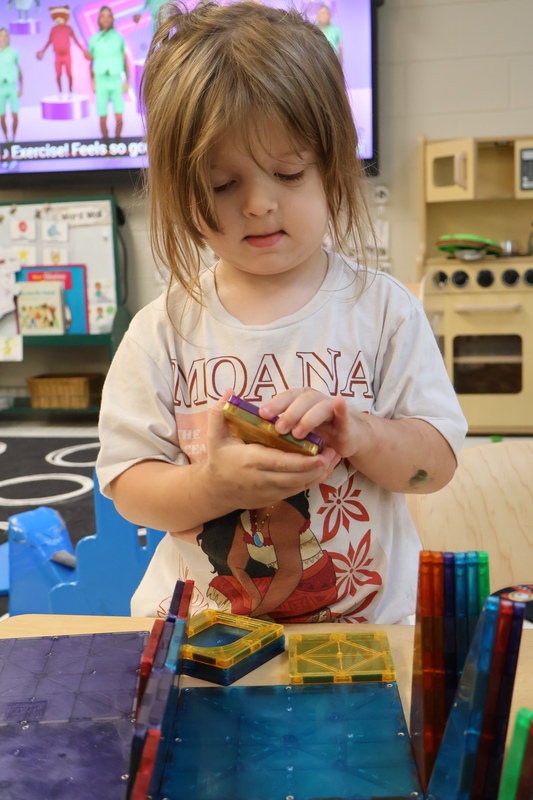 This year marked a new evaluation process that included the Teaching Pyramid Observation Tool, or TPOT. Teachers completed four six-hour training sessions, totaling 24 hours of professional development. Staff also received coaching to help them understand the expectations and demonstrate the practices already taking place in their classrooms.
The process required preparation, but Spencer said much of what teachers were being asked to demonstrate was already familiar, even though it used different terminology.
The rating represents months of preparation, but it also highlights the daily work of teachers and staff who are committed to helping young children grow socially, emotionally and academically.